
In my last blog post, I discussed how climate change is affecting gardens (and gardeners!) across the country and the world. Some of the changes are subtle, including changes in how rain is falling and temperatures that are creeping upward, although they are becoming more apparent over time. Other changes are more obvious, especially for those of us who have been around for a long time, and are causing gardeners to adapt to the “new” climate by planting different species of flowers and trees or changing how they water and feed their gardens.… Continue reading this article “How gardeners can fight climate change”
Myth Busting Soil Organic Matter
By: Visiting Professor Dr. Clain Jones

Photo: K. Olson-Rutz, Montana State University
Myth: If some organic matter is good, then a lot must be better.
I just received a soil test for a home garden that had 17% soil organic matter, compared to a more typical 3 to 8%. While that extra organic matter likely makes the soil excellent to work with, and promotes aggregation, drainage, and high water retention, the gardener reported that their plants were barely growing in that soil.… Continue reading this article “Myth Busting Soil Organic Matter”

Beetle pests in the garden
Beetles are an incredible diverse group and notoriously difficult to ID – they include over 400k known species worldwide and > 1 million additional species that are unknown.
In the garden, finding a beetle might mean you have a predator that is beneficial and eats pests, or it might mean you have a pest that eats vegetables, fruits, flowers, and plants. I’ll highlight a few of my favorites in this post.
Beneficial beetles
Some of the most familiar beetles are lady beetles (often called ladybugs or ladybirds).… Continue reading this article “Beetle pests in the garden”

A Gardener’s Guide to Reading Pesticide Labels
You could describe me as a laissez-faire gardener, since I’m pretty hand offs when it comes to pest control. My general philosophy is to pick plants that I know will succeed in my environment, prevent pest issues by keeping my plants healthy, and let emerging pest issues self-resolve through natural mechanisms and time. If a pest escalates, I might prune it out or hand-pick it, maybe spray it with a soap. But on the very rare occasion, I encounter a pest that is nasty, invasive, and tenacious, and I’m not willing to lose.… Continue reading this article “A Gardener’s Guide to Reading Pesticide Labels”
Carbonate Soils?

Usually called calcareous? Or should they be called carbonateceous? Is gypsum needed for a carbonate-dominated soil? Read on.
Soil pH or the “acidity” of a soil can be confused by the different uses and chemistries that surround the term pH, or the power of hydrogen. This can be further confused by the terms “alkalinity” or “basicity,” and by whether the solid or liquid phase of the soil is being measured. So, in short, a soil is acid if it has a pH below 7 (more hydrogen ions) and basic when above 7 (fewer hydrogen ions).… Continue reading this article “Carbonate Soils?”

How will climate change affect gardens in the future?
Recent news about extreme events from floods to earthquakes to this week’s tragedy in Tibet caused by the collapse of a glacier resulting in massive flooding have caught the attention of many people. One consequence is the appearance of many social media accounts and news stories discussing the potential links between these events and the changing climate on earth due to increases in greenhouse gases and land use alterations. While it is too early to say with any certainty how much the warming climate affected any of these events (studies that attribute natural disasters caused by extreme weather and climate to global warming take careful analysis and time to complete), it does make us wonder how the warming climate will also affect our gardens and farms in the coming years.… Continue reading this article “How will climate change affect gardens in the future?”
Can AI replace The Garden Professors?
(I’ve been absent from the blog for many months now. I need to get back into the habit of writing so I am repurposing a piece that I hope you will enjoy.)
First of all, I’m not a Luddite and I use AI all the time to find quick answers to things that have definitive answers. But questions regarding the care of gardens and landscapes require AI to scan the web for relevant information, and AI cannot easily discern between good and bad information.… Continue reading this article “Can AI replace The Garden Professors?”
Workshop in Perth!
I’ll be visiting Australia for the first time ever in a few weeks. For any Australian arborists, landscape professionals, and gardeners in the Perth area, I hope you will consider joining me for a two-day workshop on Sustainable Landscapes. Attendees will also receive a copy of my book “Sustainable Landscapes – Good Science, Practical Application.” It would be great to meet you in person!
See less

The climate outlook for the rest of 2026 and what it means for your garden
It’s been a couple of months since my last blog post, and a lot has been happening in weather and climate since then. This post will bring you up to date on the extreme weather and climate conditions we have seen since May and discuss what we can expect in the coming months. I missed last month because I was on a cruise-tour in Alaska following my retirement from the University of Georgia and was enjoying looking out the balcony window.… Continue reading this article “The climate outlook for the rest of 2026 and what it means for your garden”
When is a drought over?
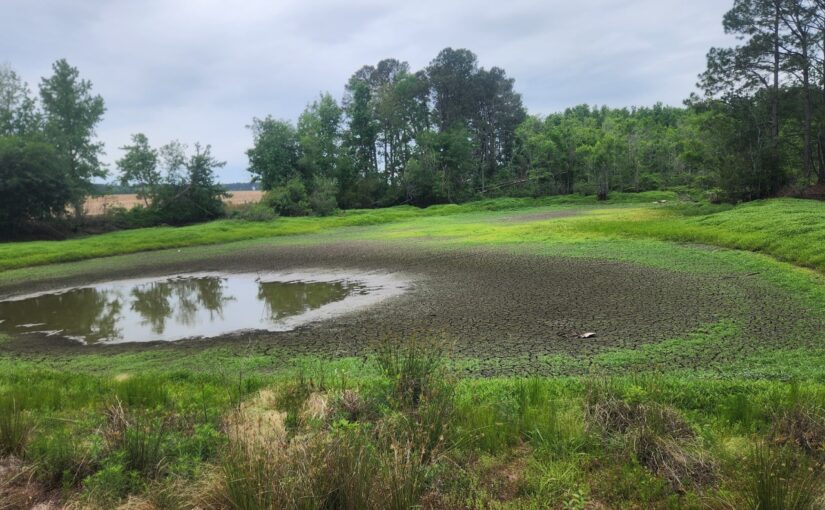
In recent months, large parts of the United States have been covered by drought, including my home region of the Southeast. This year’s drought there was caused by a combination of three things: the lack of any significant tropical activity in the US in 2025 (except TS Chantelle in the Carolinas), the La Niña that occurred over the winter, leading to warmer and drier conditions than usual (in spite of several cold outbreaks that caused significant damage to farms as far south as central Florida in January and February), and the early onset of summer high pressure in March and April that shut down any potential for the development of precipitation.… Continue reading this article “When is a drought over?”